
"That Day"

Updated: Dec 10, 2025
The prophets we read during Advent have a different vision. They stride into history and announce, in no uncertain terms, that there is a God in this universe, and this God is not neutral on matters of good and evil.
Isaiah 2:1-5 and Romans 13:11-14
November 30, 2025
Dr. Todd R. Wright
Advent is a season that draws us to look back – to remember the stories associated with the birth of our savior – the stunning annunciation, the census-forced travel to Bethlehem, Cousin John’s saga, angels and shepherds and traveling magi, prayers and singing, stars and sheep. And because they are so enchanting, we are glad to look back!
But before we immerse ourselves in looking back, we are invited to start this season by looking into the future. Both the prophet Isaiah, and Paul in his letter to the church in Rome, stress that God is at work in the brokenness of our world, in the brokenness of our lives, creating something new.
It is a significant jolt of hope for those of us who are having a hard time with the present.
I just wish Mozella could have held on long enough to grab hold of that hope!
I was reminded of her story by the shooting of two WV National Guard members in DC.
It was a Friday in April when Mozella Dansby, a bookkeeper at the Georgia Power Company, walked into her office, pulled a gun, and shot and wounded two of her supervisors. And then this 31-year-old wife and mother pointed the gun to her own head and pulled the trigger. The newspaper reported she had been distraught because once again she’d been passed over for a promotion on the job.[1] But that is not the whole story.
An acquaintance writes: “Almost a week elapsed between the time Mozella found out she’d been denied the promotion and the time she fired those shots. A week is a long time to dream of killing someone. Didn’t anyone sense her torment? Wasn’t there some friend somewhere who suddenly felt compelled to call her in the middle of one of her restless nights: ‘Girl, you’ve been on my mind. Something told me to call you!’” It might have made a difference.
Why couldn’t she find solace in the talks she had with her husband? He remembers that she’d taken off the day before to look for a new job and had come home cheerful and optimistic. He later discovered that was the day she bought the gun.
Why weren’t the sights and sounds and smells of her two small children as she bathed them, and read to them, and tucked them in that Thursday night enough to pull her back from the abyss?
Why couldn’t she just shrug off the oh too familiar institutional racism and sexism that meant that even though she was completely qualified for the job, she wasn’t really considered?
Why? Did she think justice would always be out of her reach?
The prophets we read during Advent have a different vision. They stride into history and announce, in no uncertain terms, that there is a God in this universe, and this God is not neutral on matters of good and evil. This God places moral demands on human beings and holds us accountable.
Isaiah says, in the days to come, the nations who had chased after every other god, spread evil, and mistreated their neighbors, will turn to the Lord and rush to Zion to learn how to walk in God’s ways. God will act as their judge, and they will beat their swords into plowshares.
Paul says the night that gives cover to injustice and sin, that blankets people in fear and snuffs out hope, is far gone. Dawn is already on the horizon. You can’t stop the sun’s rising!
I wish Mozella could have heard those words and soaked in them like a warm bath, like a hug, like a guarantee that the way things are now, is not the way things will always be.
It’s too late for Mozella. But it’s not too late to write a different ending to the story for others.
This past May, several of us took part in a Guns to Gardens event where we literally turned unwanted guns into the raw steel that would be used to forge garden tools, jewelry, and art.
We worked with RAWTools South. One of the co-founders explained their work,
“To turn guns into garden tools, you have to add some heat — a little more than 2,000 degrees. If the steel is too hot, it melts or burns off; too cold and it cracks under the hammer. There is a happy medium range where the magic happens — where transformation takes place — and it’s a beautiful glowing orange. The steel feels like thick clay when the hammer makes contact. As the orange glow fades, the steel hardens into its new form.
But you have to repeat the process. You put the gun barrel back into the forge and bring it out to shape it some more. You repeat that cycle over and over, using various tools. The heat brings transformation.”
He continues, “Our deepest growth often rises from a crisis or trauma or a heated moment in our lives. The prophets knew that with a little holy fire metal can be reshaped — and so can people. They knew weapons that kill can be transformed — and so can people. The prophets of old were not so much fortune-tellers as they were [catalysts] of the imagination. They weren’t trying to predict the future. They were trying to change the present. They invite us to dream of
the world as it could be and not just accept the world as it is. That takes faith!”[2]
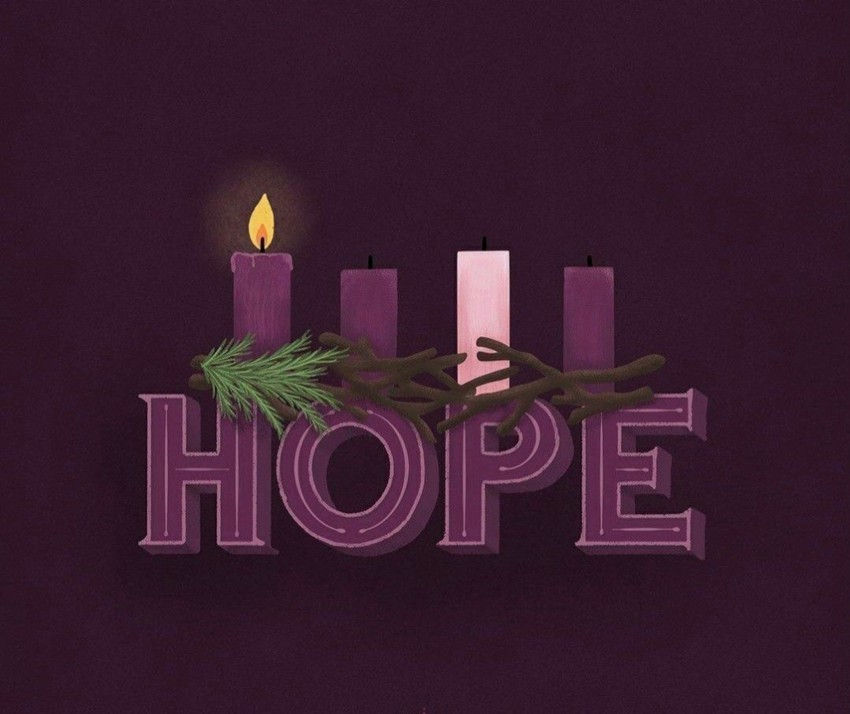
So as this Advent starts, we are invited to dream of a new world, a world promised by God.
And then we are invited, in faith, to work for it, to forge it, to live it, so hope might shine in the darkness. Amen
[1] The story of Mozella is from “That You May Live” by Kathlyn James, 6/29/91
[2] From “Why and how we beat guns into garden tools” by Shane Claiborne and Michael Martin, 3/13/19 in Christian Century magazine

Comments